サンアントニオのリバーウォークの創造に貢献した方々:Robert H. H. Hugman(1902–1980)、Lila Banks Cockrell(1922-2019)、David Straus II (1923〜2022)
Robert H. H. Hugman: (1902–1980)
Robert H. H. Hugman: Architect of San Antonio’s Iconic River Walk
By: Lewis F. Fisher
Published: December 22, 2015
Updated: October 18, 2016
Robert and Martha Hugman. Courtesy of Find-a-Grave.
Hugman, Robert Harvey Harold (1902–1980).Robert H. H. Hugman was the architect of San Antonio’s WPA River Walk, one of the world’s most distinctive urban linear parks. He was born at San Antonio, Texas, on February 8, 1902, to Robert C. H. Hugman, a carpenter who had emigrated from England, and Annie (Weik) Hugman, a native San Antonian. He graduated from Brackenridge High School and went on to study architecture and city planning at the University of Texas in 1920. He left in 1924 without graduating and took a job as a draftsman in New Orleans.
When Hugman returned in 1927 to open an architecture practice in San Antonio, the city was in the midst of a flood prevention program begun just prior to the devastating flood of 1921. Even before the flood, the city council had rejected engineers’ recommendations to clear trees along the picturesque nearly half-mile Great Bend in the heart of downtown and pave its bed as a flood channel. Instead, the city was building a bypass channel with a low dam at its upstream end to deflect the river’s normal flow around the bend, preserving the bend while allowing floodwaters to flow over the dam and into the bypass channel.
Robert Hugman realized that the Great Bend could be freed from even low rising water if there were gates at each end, thus permitting businesses to open directly onto riverside walkways without fear of water flowing indoors. As the bypass channel was being completed in 1929, Hugman included such gates in a plan he called The Shops of Aragon and Romula. The project would capitalize on San Antonio’s Spanish heritage much as he had seen New Orleans draw from its picturesque French architectural heritage. A cobblestone lane with Spanish-style shops would descend through “Aragon” from Houston Street to the opening of the Great Bend. Pedestrians would cross a stone footbridge to the bend and into “Romula,” with its shops, restaurants, and sunken gardens. Tourists would ride in brightly colored boats to be “fashioned after the gondolas of Venice, only with Spanish design.”
Mayor C. M. Chambers incorporated Hugman’s concept into a cut-rate master plan that would avoid the fees proposed by noted city planner Harland Bartholomew of St. Louis. But Bartholomew was backed by San Antonio Conservation Society members and other civic leaders who had been trying for years to get a professional master plan undertaken, and he was hired. Bartholomew favored maintaining the traditional River Park, opened by the city in 1914 through downtown and around most of the Great Bend.
“Father of the River Walk” Plaque for Robert Hugman.
Hugman, pushed aside, kept working on such projects as his Spanish Colonial Revival residence for William A. Turner (1928) in the suburb of Olmos Park. But he continued to advocate his river plan before any group that would listen. With the Depression he went on the federal payroll as a planner with the Works Progress Administration (later called the Work Projects Administration), under State Administrator Henry P. Drought and District Director Edwin P. Arneson. He helped reconstruct Woodlawn Lake and Seguin’s Starke Park, where he designed stone walkways beside Walnut Creek and the Art Deco Recreation Building (1938). His vision for the San Antonio River eventually came to the attention of A. C. (Jack) White, manager of the swank new Plaza Hotel at the end of the Great Bend and a future mayor of San Antonio. White met with Hugman, Drought, and Arneson and came up with a way for the WPA to do the work. A riverside improvement district raised local tax funds. Congressman Maury Maverick secured federal WPA funding. In the summer of 1938 Hugman became the WPA’s architect for the project.
Construction of the San Antonio River Walk (circa 1930).
Courtesy of the University of Texas at San Antonio Institute of Texan Cultures.
Ground was broken on March 29, 1939, for the River Walk, no longer termed Aragon and Romula. The lane down from Houston Street was eliminated in favor of multiple distinctive stairways from streets above. The River Walk would be slightly longer than the old River Park and extend from Lexington Avenue at the north more than a mile around to the end of the Great Bend. The riverbed was scraped, and the old River Park’s even, concrete-plastered channel walls were replaced with slightly irregular limestone walls that gave the appearance of a natural channel. The greatest concentration of new features would be within the protected Great Bend. It was drained and those plants that could be moved were temporarily moved out. Hugman designed a lighting system, wrought iron signage and gates, meandering stone sidewalks of alternating design, rustic cedar benches, two arched bridges, water features, and semitropical landscaping. A junkyard was replaced with the signature Arneson River Theater, named in honor of the WPA’s recently deceased district director.
Robert H. H. Hugman. Courtesy of the San Antonio Express-News.
San Antonio River Walk.
But the unsightly bed of the drained, beloved river lined with bright, freshly cut limestone in fanciful patterns was becoming too much for many civic leaders and conservationists, who still preferred the staid appearance of the old River Park. Even the distinguished architect Atlee B. Ayres complained that Hugman’s project was not being done “in a simple manner” and that, “with few exceptions, it is a most unwise expenditure and will be a source of ridicule to our tourist friends and others.” But Hugman remained adamant that the bright limestone would mellow with age and that landscaping would soften what appeared to be harsh effects. He refused to reduce his use of stonework. In March 1940 he learned that Congressman-turned-Mayor Maury Maverick had quietly redirected a new shipment of stone to the WPA’s adjoining La Villita project. Hugman filed a formal complaint to his oversight committee, chaired by Jack White. To Hugman’s dismay, the committee, tired of the controversies, unanimously fired him. Most of Hugman’s key elements, however, were already in place, and the landscape architect hired to replace him—J. Fred Buenz—simply worked around them. In March 1941 the WPA signed over to the city 8,500 feet of riverbanks with 17,000 feet of new sidewalks, 11,000 cubic yards of masonry, 31 stairways, 3 dams, and some 4,000 trees, shrubs and plants.
Map of the San Antonio River Walk.
Although the commercial development he foresaw was not materializing, Hugman sought to demonstrate the setting’s viability by opening an office in a riverside basement at the foot of a stairway to Commerce Street. In 1947 a few doors down the street, he formed the firm of Hugman & Silber with longtime architect Paul George Silber. They entered a competition for another riverside project, the National Park Service’s Jefferson National Expansion Memorial beside the Mississippi River in St. Louis, but were unsuccessful. After the relationship with Silber ended, Hugman practiced on his own until 1957, when he went to work as an architect at nearby Randolph Air Force Base. He retired in 1972.
Robert Hugman in San Antonio. Courtesy of Steve Krause and San Antonio Express-News.
Statue and Plaque for Robert Hugman in San Antonio. Courtesy of Sean Paul Klinksiek.
Grave of Robert H. H. Hugman. Courtesy of Find-a-Grave.
In 1970, as the River Walk was at last becoming commercially successful, Hugman was rediscovered and honored with an award from the San Antonio Chapter of the American Institute of Architects. After that, he made occasional public statements urging “good taste, beauty, quiet dignity, satisfying aesthetics and good food” along the fast-developing River Walk. In 1978 he did the first striking of the bells named in his honor and finally hung at the Arneson River Theater. Robert H. H. Hugman died at San Antonio, Texas, on July 22, 1980, and was buried in City Cemetery No. 6. In 1924 he had married Martha Aurora Smith of Austin, who died in 1941. They had two children—Robert H. H., Jr., and Anne Karin (Mrs. William Robinson). His 1948 marriage to Julia William ended in divorce. In 1968 he married Elene Barnby Newman, who survived him. He was a member of Madison Square Presbyterian Church.
ロバート・H・H・ハグマン(1902–1980)
サンアントニオの象徴「リバーウォーク」の建築家
著者:ルイス・F・フィッシャー
公開日:2015年12月22日 / 更新日:2016年10月18日
ロバート・H・H・ハグマンは、世界で最も特徴的な都市型線形公園の一つである、サンアントニオのWPA(雇用促進局)リバーウォークを設計した建築家です。彼は1902年2月8日、テキサス州サンアントニオにて、イギリスから移住した大工の父ロバート・C・H・ハグマンと、地元サンアントニオ出身の母アニー(ワイク)の間に生まれました。ブラッケンリッジ高校を卒業後、1920年にテキサス大学で建築と都市計画を学び始めましたが、1924年に卒業を待たずして大学を去り、ニューオーリンズで製図工としての仕事に就きました。
1927年、建築事務所を開設するためにサンアントニオに戻った際、街は1921年の甚大な洪水被害を受けて開始された治水プログラムの真っ只中にありました。洪水以前から市議会は、ダウンタウン中心部にある約0.5マイル(約800メートル)の風光明媚な「グレート・ベンド(大屈曲部)」沿いの木々を伐採し、川底を舗装して放水路にするというエンジニアの提案を拒否していました。その代わりに市は、上流に低いダムを備えたバイパス水路を建設し、通常の流れを曲がり角に導きつつ、洪水時にはダムを越えてバイパスに流すことで、景観を維持しようとしていました。
ハグマンは、両端にゲート(水門)を設置すれば、わずかな増水からもグレート・ベンドを守ることができ、店舗が浸水の心配なく直接リバーサイドの歩道に面して営業できることに気づきました。1929年にバイパス水路が完成に近づくと、ハグマンは「アラゴンとロムラの店(The Shops of Aragon and Romula)」と名付けた計画にこのゲートを盛り込みました。このプロジェクトは、ニューオーリンズがフランス風の建築遺産を活用したように、サンアントニオのスペイン文化の遺産を活かそうとするものでした。ヒューストン通りからグレート・ベンドの入り口までは、スペイン風の店が並ぶ「アラゴン」の石畳の道が下り、歩行者は石の歩道橋を渡って、ショップやレストラン、サンクン・ガーデン(沈床園)がある「ロムラ」へと向かいます。観光客は「ベネチアのゴンドラを模しつつ、スペインのデザインを取り入れた」色鮮やかなボートに乗るという構想でした。
C・M・チェンバーズ市長は、著名な都市計画家ハーランド・バーソロミューが提示した高額な費用を避けるため、ハグマンのコンセプトを安価なマスタープランに組み込みました。しかし、長年プロによる計画を求めていたサンアントニオ保存協会や市民リーダーたちはバーソロミューを支持し、結局彼が採用されました。バーソロミューは、1914年に市が開設した伝統的なリバーパークの維持を主張しました。
脇に追いやられたハグマンは、オルモス・パークのウィリアム・A・ターナー邸(1928年、スペイン・コロニアル・リバイバル様式)などの仕事を進めながらも、耳を傾けてくるあらゆるグループに対して自身の川の計画を訴え続けました。世界恐慌が始まると、彼は連邦政府の雇用促進局(WPA)のプランナーとして公務に就きました。彼はウッドローン湖の再建やセギンのスターク・パークの整備を支援し、そこで石造りの歩道やアール・デコ様式のレクリエーション・ビル(1938年)を設計しました。
彼のサンアントニオ川へのビジョンは、やがてグレート・ベンドの端にある高級ホテル、プラザ・ホテルの支配人で後の市長となるA・C(ジャック)・ホワイトの目に留まりました。ホワイトはハグマンらと協議し、WPAが工事を行う枠組みを考案しました。河川改良区が地元の税金を調達し、モーリー・マーベリック下院議員が連邦政府のWPA資金を確保しました。1938年夏、ハグマンはついにこのプロジェクトのWPA建築家に就任しました。
1939年3月29日にリバーウォーク(もはや「アラゴンとロムラ」とは呼ばれませんでした)の着工式が行われました。ヒューストン通りからの道は廃止され、代わりに上の通りから降りる複数の特徴的な階段が設けられました。リバーウォークは旧リバーパークよりわずかに長くなり、北のレキシントン・アベニューからグレート・ベンドの終点まで1マイル以上に及びました。川底はさらわれ、旧来の平坦なコンクリートの壁は、自然な水路に見えるよう不規則な石灰岩の壁に作り替えられました。最も多くの新機能は、守られたグレート・ベンド内に集中しました。川の水は抜かれ、移植可能な植物は一時的に避難させられました。ハグマンは、照明システム、錬鉄製の看板やゲート、多様なデザインの石造りの歩道、杉のベンチ、2つのアーチ橋、水景施設、そして亜熱帯の造園を設計しました。また、廃品置き場だった場所は、亡くなったWPA地区局長を記念して名付けられた「アーネソン・リバー・シアター」へと生まれ変わりました。
しかし、水が抜かれた愛する川の底が、派手な模様に切り出された真新しい石灰岩で覆われていく様子は、旧来の落ち着いたリバーパークを好む市民リーダーや保存活動家たちには耐え難いものでした。高名な建築家アトリー・B・エイヤーズでさえ、「単純な方法」で工事が行われていないと不満を漏らし、「観光客や他者の失笑を買う無駄遣いだ」と批判しました。しかしハグマンは、明るい石の色は年月とともに落ち着き、植栽によって厳しい印象も和らぐと主張し、石造りの多用を譲りませんでした。1940年3月、市長に転身していたモーリー・マーベリックが、リバーウォーク用の新しい石材を隣接するラ・ヴィリータ・プロジェクトへ密かに転用していたことが判明しました。ハグマンはジャック・ホワイトが議長を務める監督委員会に正式な苦情を申し立てましたが、度重なる論争に疲れ果てていた委員会は、ハグマンを全会一致で解雇しました。
しかし、ハグマンが構想した主要な要素のほとんどはすでに完成しており、後任のランドスケープ・アーキテクト、J・フレッド・ブエンツはそれを活かして仕上げを行いました。1941年3月、WPAは8,500フィートの河岸、17,000フィートの歩道、11,000立方ヤードの石積み、31の階段、3つのダム、そして約4,000本の樹木や植物を市に引き渡しました。
ハグマンが予見した商業的発展はすぐには実現しませんでしたが、彼はコマーシャル通りへの階段のふもとにあるリバーサイドの地下室に事務所を開き、この場所の可能性を示そうとしました。1947年には同じ通り沿いにポール・ジョージ・シルバーと共同事務所を設立しました。彼らはセントルイスのミシシッピ川沿いにあるジェファーソン・ナショナル・エクスパンション・メモリアル(現在のゲートウェイ・アーチ付近)のコンペにも参加しましたが、落選しました。その後ハグマンは1957年まで個人で活動し、その後近隣のランドルフ空軍基地で建築家として勤務。1972年に引退しました。
1970年、リバーウォークがついに商業的な成功を収めるようになると、ハグマンは再評価され、アメリカ建築家協会(AIA)サンアントニオ支部から表彰を受けました。その後、彼は発展を続けるリバーウォークに対し、「良識、美しさ、静かな品格、満足のいく美的感覚、そして良質な食事」を求める公的な発言を時折行いました。1978年には、自身の名を冠してアーネソン・リバー・シアターに設置された鐘の最初の鐘打ちを行いました。
ロバート・H・H・ハグマンは1980年7月22日、サンアントニオで亡くなり、市営墓地第6号に埋葬されました。1924年にオースティン出身のマーサ・オーロラ・スミスと結婚し(1941年没)、二人の子供(ロバート・ジュニアとアン・カリン)をもうけました。1948年のジュリア・ウィリアムとの結婚は離婚に終わりました。1968年にエレーン・バーンビー・ニューマンと結婚し、彼女が彼を見送りました。彼はマディソン・スクエア長老派教会の会員でした。
■リバーウォーク建設の裏側にある、より深い歴史的背景の解説。(by Gemini)
- 1921年の大洪水と「川の消滅」の危機
リバーウォークの歴史を語る上で欠かせないのが、1921年9月にサンアントニオを襲った壊滅的な洪水です。わずか数時間で街の大部分が浸水し、50人以上の死者を出しました。
この悲劇を受けて、当時の市当局やエンジニアたちは、再発防止のために「川をコンクリートで埋め立てて舗装し、下水道(放水路)にしてしまう」という、極めて実務的な計画を立てました。もしこれが実行されていたら、現在の美しい景観は存在しませんでした。これに猛反対したのが、1924年に設立された「サンアントニオ保存協会」などの市民団体であり、彼らの活動が川を「下水道」から「公園」へと救い出すきっかけとなりました。
- ニューディール政策とWPA(雇用促進局)の役割
記事に登場する「WPA(Works Progress Administration)」は、世界恐慌からの回復を目指すフランクリン・ルーズベルト大統領のニューディール政策の一環として設立された機関です。
リバーウォークは単なる都市美化運動ではなく、失業対策事業としての側面が非常に強かったのです。
熟練職人の雇用: 記事にある「不規則な石灰岩の壁」や「手作りの鉄細工」などは、機械化された現代の工法とは異なり、多くの石工や職人の手仕事を必要としました。これにより、恐慌で職を失った地元の人々に給与を支払うことができました。
予算の確保: 地元の反対や資金不足で停滞していたハグマンの構想が動き出したのは、連邦政府からの莫大な資金援助があったからです。
- ハグマンの「アーバン・ファンタジー」と批判
ハグマンの設計思想は、当時の建築界ではかなり独特でした。
ベネチアとスペインの融合: 彼は単に川をきれいにするだけでなく、ベネチアの運河のようなロマンチックな商業空間(アラゴンとロムラの店)を夢見ていました。
批判の理由: 記事にあるエイヤーズのような伝統派建築家がハグマンを批判したのは、彼のデザインが「作為的すぎる(ディズニーランドのような偽物感がある)」と感じたためです。当時のエリート層は、よりシンプルで自然な、いわゆる「公園らしい」公園を望んでいましたが、ハグマンは商業的な賑わいと華やかさを重視しました。この「商業と景観の融合」という視点こそが、現代のリバーウォークの成功の鍵となりました。
- 1968年の万博「ヘミスフェア」による完成
ハグマンが解雇され、1941年にプロジェクトが一旦完了した後も、リバーウォークはすぐに成功したわけではありませんでした。しばらくの間、川沿いは暗く、犯罪の温床になるような場所さえありました。
転機となったのは、ハグマンの死の約12年前、1968年にサンアントニオで開催され世界博覧会「ヘミスフェア(HemisFair ’68)」です。この万博に合わせてリバーウォークの大規模な再開発と浄化が行われ、ホテルやレストランが次々とオープンしました。ハグマンが1929年に描いた「水辺で人々が食事を楽しみ、ボートが行き交う」というビジョンが、約40年の時を経てようやく現実のものとなったのです。
===========================
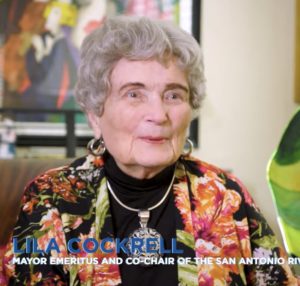
The Honorable Lila Banks Cockrell (1922-2019)
The Honorable Lila Banks Cockrell (1922-2019)
TRAILBLAZING ENVIRONMENTALIST AND CIVIC LEADER
“The San Antonio River, so graceful in its flow through our community is my personal symbol of the tie that binds us all together.”
Lila Cockrell, 2018
Mayor Lila Cockrell loved San Antonio, with an especially deep affection for its beautiful river. She was instrumental in revitalizing the 13-mile waterway and was a key figure in its redesign as an extraordinary linear park that stretches from Brackenridge Park through downtown to the city’s southernmost mission, San Francisco de Espada, built in 1690. She was a champion for the creation of this modern Lock and Dam, enabling colorful barges to travel up-river.
The route passes two former 19th century breweries that were transformed into the San Antonio Museum of Art and The Pearl. During the revitalization of this segment of the river, a cache of old beer bottles was discovered—from the late 1880s through the 1970s. The breweries dumped them in the river!
Elected mayor of San Antonio in 1975, Lila Cockrell was the first woman mayor of a major U.S. city. She served four terms (1975-1979; 1989-1991) and many of her accomplishments focused on pioneering stewardship of the environment. She was known for her steady, calm leadership and guided San Antonio toward unprecedented protection of its water supply and committed the city to diversified reserves of energy for power generation.
After she left city government, she continued to blaze trails for the environment. As Executive Director of the San Antonio Parks Foundation, she helped design what eventually became a $62 million project to restore the dilapidated Sunken Gardens, built in an old rock quarry in Brackenridge Park in 1917. The modern transformation includes waterfalls, ponds filled with koi fish, lush plants and flowers, and a renovated historic Japanese Tea House.
Today these gardens display a spectacular celebration of the natural environment, as does the restored natural habitat of the southern reach of the San Antonio River. In concert with the rest of the famous RiverWalk, they attract millions of visitors to San Antonio each year. People come from all over the United States and the world; they range from regular folks like us to royalty like Queen Elizabeth and Prince Charles, who were hosted by The Honorable Lila Cockrell in 1990, and King Felipe VI and Queen Letizia of Spain who visited in 2018, to rapper Jack Harlow and Metallica.
Before she died in 2019, Lila Cockrell published her autobiography, Love Deeper than a River (Trinity University Press). It highlights her life as a civic leader and trailblazer for the environment, and shares memories of cruising this extraordinary waterway over the years on the colorful barge which carries her name:
“When the king and queen of Spain visited San Antonio in 2018, they took a ride on the MS. LILA barge and fell in love with our multi-cultural city and its wondrous river….just as I did so many years ago.” LBC, 2019
ライラ・バンクス・コックレル市長(1922-2019)
環境保護と市民リーダーシップの先駆者
「私たちのコミュニティを優雅に流れるサンアントニオ川は、私たち全員を結びつける絆の、私にとっての個人的な象徴です。」 —— ライラ・コックレル、2018年
ライラ・コックレル市長はサンアントニオを愛し、とりわけその美しい川に対して深い愛情を抱いていました。彼女は、全長13マイル(約21キロメートル)に及ぶ水路の再生において中心的な役割を果たしました。ブラッケンリッジ・パークからダウンタウンを抜け、1690年に建立された市最南端の伝道所「サン・フランシスコ・デ・エスパーダ」まで続く、類まれな線形公園としての再設計におけるキーパーソンでした。また、彼女はこの近代的なロッ&ダム(閘門とダム)建設の強力な推進者でもあり、これによって色鮮やかな観光用台船(バージ)が川を遡上することが可能になったのです。
このルートは、かつて19世紀に醸造所だった2つの建物(現在はサンアントニオ美術館と『ザ・パール』へと変貌)を通過します。この区間のリバー再生工事の際、1880年代後半から1970年代にかけての古いビール瓶が大量に発見されました。かつての醸造所が川に投げ捨てていたものです!
1975年にサンアントニオ市長に選出されたライラ・コックレルは、アメリカの主要都市で初の女性市長となりました。彼女は計4期(1975–1979年、1989–1991年)を務め、その功績の多くは先駆的な環境管理に焦点を当てたものでした。彼女は着実で冷静なリーダーシップで知られ、サンアントニオを前例のない水源保護へと導き、発電のためのエネルギー資源の多様化を約束しました。
市役所を去った後も、彼女は環境のための道を切り開き続けました。サンアントニオ公園財団の事務局長として、ブラッケンリッジ・パーク内の古い採石場跡に1917年に造られた、当時荒廃していた「サンクン・ガーデン(沈床園)」を修復する6,200万ドルのプロジェクトの設計を支援しました。現代的な変貌を遂げたこの庭園には、滝、鯉の泳ぐ池、青々とした植物や花々、そして修復された歴史的な日本茶屋(ジャパニーズ・ティーハウス)が含まれています。
今日、これらの庭園は、サンアントニオ川南部の復元された自然生息地と同様に、自然環境の素晴らしい祭典の場となっています。有名なリバーウォークの他の区間と相まって、毎年世界中から数百万人もの観光客をサンアントニオに惹きつけています。訪れる人々は、私たちのような一般市民から、1990年にコックレル市長がもてなしたエリザベス女王やチャールズ皇太子(当時)、2018年に訪れたスペイン国王フェリペ6世とレティシア王妃といった王族、さらにはラッパーのジャック・ハーロウやメタリカに至るまで、多岐にわたります。
2019年に亡くなる前、彼女は自叙伝『Love Deeper than a River(川よりも深い愛)』(トリニティ大学出版局)を出版しました。そこには市民リーダーおよび環境の先駆者としての彼女の人生が綴られており、自身の名前を冠した色鮮やかな台船「ミス・ライラ号」で、この素晴らしい水路を長年巡った思い出が共有されています。
「2018年にスペイン国王夫妻がサンアントニオを訪れた際、彼らは『ミス・ライラ号』に乗り、この多文化都市と素晴らしい川に恋をしました……ちょうど何年も前に私がそうしたように」 —— LBC(ライラ・バンクス・コックレル)、2019年
■歴史的なポイント(by Gemini)
「ミス・ライラ号」: 記事にある通り、リバーウォークを象徴する観光ボートの一つには、彼女の功績を称えてその名前が付けられています。
女性リーダーの先駆け: 1970年代に人口100万人規模の都市で女性が市長を務めるのは極めて異例のことであり、彼女の成功がその後のアメリカ政治における女性進出のモデルとなりました。
日本茶屋(Japanese Tea House): 文章に出てくる日本茶屋は、戦時中に「中国茶園」と改称されていましたが、彼女たちの尽力により、歴史的背景を尊重して本来の名称と姿を取り戻したという経緯があります。
================================================
David Straus II(1923〜2022年)
River Walk visionary and civic leader David Straus II dies at 98
https://sanantonioreport.org/david-straus-ii-obituary/
by Shari Biediger
June 4, 2022
David Straus II, a decorated military officer, veteran of three wars and a local businessman who helped make the San Antonio River Walk the most visited attraction in Texas, died May 28. He was 98.
Friends and family recalled Straus’ limitless energy, service to country and steadfast commitment to tackling any obstacle.
Joe Straus Jr. recounted a number of leadership roles his brother held in San Antonio going back decades, including heading up the annual United Way campaign, chairing the San Antonio Chamber of Commerce and planning HemisFair ‘68.
“He served on a number of boards and he was active — he didn’t take a passive role in any of them,” Straus said.
His older brother lived by the words of President Calvin Coolidge, who said, “Nothing in this world can take the place of persistence. … The slogan ‘press on!’ has solved and always will solve the problems of the human race.”
David Straus was born in 1923 and grew up on the 1,000-acre La Cima Ranch in northwest San Antonio, land his father later sold to the growing insurance firm USAA for its headquarters.
After graduating from the Texas Military Institute, he attended Dartmouth College until 1943 when he enlisted in the Marine Corps at age 19. Straus fought in the Okinawa campaign, a major battle waged in the Pacific during World War II. Soon after, he was sent to China to aid that country in protecting a railway during a civil war.
In a book he authored about his service, Straus wrote, “I’m immensely proud of my time as a China Marine. There are a few titles that carry as much instant respect with the Marine Corps veterans who appreciate the proud chapter in history that China Marines helped write on the world’s largest continent in the 20th century.”
Straus was a decorated Marine who served in the Pacific War.
Straus was a decorated Marine who served in the Pacific during World War II. Credit: Courtesy / The Straus Family
In 1951, Straus was recalled to active duty service and assigned to protect a critical outpost in Seoul during the Korean War. For his military service, he received multiple combat awards and medals, and his example inspired grandson Jacob to serve in the Marines for five years.
Returning home to San Antonio, Straus became the third generation to lead the Straus-Frank Co., a wholesale distribution business started by his grandfather in 1870. Straus worked with the company for more than 58 years while also becoming involved in businesses ranging from farming and ranching to restaurants, banking and real estate development.
Some of the properties Straus came to own were located downtown along the San Antonio River.
In 1959, he encouraged the chamber of commerce to hire a Disneyland designer to come up with a plan to renovate the River Walk, according to historian Lewis Fisher.
The proposal “horrified” Straus and others for its similarity to an amusement park and was tossed in favor of a more suitable rendering presented by the San Antonio chapter of the American Institute of Architects.
Straus then convinced building owners to open storefronts at the river level, an effort that eventually led to extending the River Walk and to what would become the site of the world’s fair in 1968.
In a 2018 interview, Jim Cullum Jr. said Straus was the “main guy” behind developing the River Walk and the “volcano of energy” working with him and other business owners to transform the waterway into a favorite tourist destination. But “he was always behind the scenes and never wanted credit for it,” Cullum said.
Straus founded the San Antonio Riverwalk Commission to review permits and development along the River Walk and wrote a policy manual that became the basis of a master plan. In 1964, he formed the Paseo del Rio Association to support businesses along the river.
It was Straus who financed the development of a prototype for the first river barge, inviting the mayor and City Council members to a lunch served by the Casa Rio restaurant on the barge.
In addition to his work to improve the River Walk and later develop the Retama Park Horse Race Track in Selma, Straus served on numerous civic boards and commissions, including the Alamo Area Council of Boy Scouts, the Fiesta San Antonio Commission, Southwest Research Institute and the San Antonio Economic Development Foundation.
He also served on the board of Frost Bank, the Bank of San Antonio, Lone Star Brewing Company, the San Antonio Spurs and other organizations.
Straus enjoyed golf, snow skiing, hunting, gardening and sausage making, according to his obituary. Straus was an uncle to the former speaker of the Texas House of Representatives, Joe Straus III.
The deceased is survived by his wife Debbie Straus; sons David Straus III, F. Anthony Straus and their spouses, and Daniel Straus; his brother Joe Straus Jr. and wife Joci; 11 grandchildren and their spouses and six great-grandchildren.
A private service was held on Thursday. Straus was interred at the Temple Beth-El Cemetery.
デイビッド・ストラウス2世(1923〜2022年)
リバーウォークの先見者であり市民リーダー、デイヴィッド・ストラウス2世が98歳で死去
執筆:シャリ・ビエディガー 2022年6月4日
勲章を授与された退役軍校官であり、3つの戦争を経験し、テキサス州で最も多くの観光客が訪れる名所にサンアントニオ・リバーウォークを育て上げた地元実業家、デイヴィッド・ストラウス2世が5月28日に亡くなりました。享年98歳でした。
友人や家族は、ストラウス氏の無限のエネルギー、国への奉仕、そしてどんな障害にも立ち向かう確固たる姿勢を回想しました。
弟のジョー・ストラウス・ジュニア氏は、兄が数十年にわたりサンアントニオで果たしてきた数々の指導的役割を列挙しました。それには、毎年のユナイテッド・ウェイ・キャンペーン(共同募金活動)の主導、サンアントニオ商工会議所の会頭、そして1968年の万博「ヘミスフェア」の計画立案などが含まれます。
「彼は多くの理事会に名を連ねていましたが、常に活動的でした。どの役割においても受動的な立場を取ることはありませんでした」とストラウス氏は語りました。
兄のデイヴィッドは、カルビン・クーリッジ大統領の言葉を座右の銘としていました。「この世で忍耐に代わるものはない。……『突き進め!』というスローガンこそが、人類の問題を解決してきたし、これからも解決し続けるだろう」という言葉です。
デイヴィッド・ストラウスは1923年に生まれ、サンアントニオ北西部にある1,000エーカーのラ・シマ牧場で育ちました。その土地は後に、父によって成長著しい保険会社USAAの本社用地として売却されました。
テキサス・ミリタリー・インスティテュートを卒業後、ダートマス大学に進学しましたが、1943年、19歳の時に海兵隊に志願しました。ストラウスは、第二次世界大戦中の太平洋における主要な戦いである沖縄戦で戦いました。その後すぐに、内戦中の中国へ送られ、鉄道の防衛を支援しました。
自身の従軍体験を綴った著書の中で、ストラウスはこう記しています。「『チャイナ・マリーン(中国駐留海兵隊)』であったことを、私は計り知れないほど誇りに思っています。20世紀、世界最大の領土でチャイナ・マリーンが書き上げた歴史の誇らしい章を理解している海兵隊の退役軍人たちの間で、これほど即座に敬意を払われる肩書きはほかにありません」
1951年、ストラウスは現役任務に呼び戻され、朝鮮戦争中のソウルにおける重要な前哨基地の防衛に任命されました。軍務を通じて数多くの戦闘勲章やメダルを受章した彼の背中は、孫のジェイコブが5年間海兵隊に従事するインスピレーションとなりました。
サンアントニオに帰郷後、ストラウスは、1870年に祖父が創業した卸売配送業「ストラウス・フランク社」の3代目社長に就任しました。彼は58年以上同社に携わる傍ら、農業、牧畜、レストラン、銀行、不動産開発など、幅広い事業に深く関わりました。
ストラウスが所有するようになった不動産のいくつかは、ダウンタウンのサンアントニオ川沿いに位置していました。
歴史家のルイス・フィッシャーによれば、1959年、彼は商工会議所に働きかけ、リバーウォークの改修計画を立案させるためにディズニーランドのデザイナーを雇用したといいます。
しかし、その提案はあまりに遊園地的であったため、ストラウスや周囲を「戦慄」させました。結局その案は破棄され、代わりにアメリカ建築家協会(AIA)サンアントニオ支部が提示した、より適切なレンダリング(完成予想図)が採用されることになりました。
その後、ストラウスはビルの所有者たちを説得し、川のレベル(地下階)に店舗の入り口を開かせるよう働きかけました。この努力が、最終的にリバーウォークの延伸と、1968年の万博会場の設営へと繋がっていったのです。
2018年のインタビューで、ジム・カラム・ジュニア氏は、ストラウスこそがリバーウォーク開発の「中心人物(メイン・ガイ)」であり、この水路をお気に入りの観光目的地へと変貌させるために他のビジネスオーナーたちと協力した「エネルギーの火山」であったと語りました。しかしカラム氏によれば、「彼は常に黒子に徹し、決して自分の手柄にしようとはしなかった」といいます。
ストラウスは、リバーウォーク沿いの許可証発行や開発を審査する「サンアントニオ・リバーウォーク委員会」を設立し、現在のマスタープランの基礎となる政策マニュアルを作成しました。1964年には、川沿いのビジネスを支援するために「パセオ・デル・リオ協会」を結成しました。
また、最初の観光用台船(リバーバージ)のプロトタイプ開発に資金を提供したのもストラウスでした。彼は市長や市議会議員をそのバージに招待し、レストラン「カサ・リオ」のランチを船上で振る舞ったのです。
リバーウォークの改善や、後にセルマに建設されたレタマ・パーク競馬場の開発に加え、ストラウスはボーイスカウトのアラモ・エリア評議会、フェスタ・サンアントニオ委員会、サウスウェスト・リサーチ・インスティテュート、サンアントニオ経済開発財団など、数多くの市民理事会や委員会で奉仕しました。
また、フロスト銀行、バンク・オブ・サンアントニオ、ローン・スター・ブリューイング社、サンアントニオ・スパーズなどの組織の取締役も務めました。
お悔やみ記事によれば、ストラウスはゴルフ、スキー、狩猟、ガーデニング、そしてソーセージ作りを楽しんだといいます。また、彼はテキサス州下院の元議長であるジョー・ストラウス3世の叔父にあたります。
遺族には、妻のデビー・ストラウス、息子のデイヴィッド3世、F・アンソニー・ストラウスとその配偶者たち、ダニエル・ストラウス、弟のジョー・ストラウス・ジュニアと妻のジョシ、11人の孫とその配偶者、そして6人の曾孫がいます。
葬儀は木曜日に非公開で行われました。ストラウスはテンプル・ベス・エル墓地に埋葬されました。
■デイヴィッド・ストラウス2世の功績のポイント(by Gemini)
これまでに紹介した建築家ハグマン、政治家コックレルに続き、ストラウスは「ビジネスとコミュニティの調整役」として重要な役割を果たしました。
「ディズニーランド化」の拒絶:
彼はリバーウォークに活気を求めていましたが、安っぽいテーマパークになることには反対しました。地元の建築家たちのデザインを支持したことが、現在の「サンアントニオらしい」落ち着いた美しさを守る決め手となりました。
川沿い店舗の「裏口」を「表口」へ:
当時、川沿いのビルの地下階は単なる倉庫やゴミ置き場として使われていました。ストラウスがオーナーたちを説得し、川に面した店舗(レストランやショップ)を作らせたことが、リバーウォークに経済的な命を吹き込みました。
ボートでのランチ:
彼がポケットマネーでボートの試作機を作り、政治家たちを接待したエピソードは有名です。「川の上で食事ができる」という体験を実際に証明してみせたことが、後の観光ビジネスの基盤となりました。